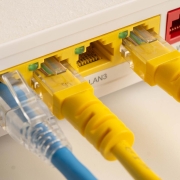
Network devices are the connection point between internet access, local equipment, and the users who depend on stable communication every day. The image shows several Ethernet cables connected to LAN ports and a WAN port, which is a common setup in routers, gateways, and access network equipment. Although these ports may look simple, they play an important role in how data moves between a local network and the wider internet.

What Is the Difference Between LAN and WAN?

LAN stands for Local Area Network. It is the internal network used inside a home, office, building, hotel, campus, or business environment. Devices such as computers, access points, printers, IP cameras, switches, and internal systems can connect through LAN ports to communicate with each other and access the internet.

WAN stands for Wide Area Network. The WAN port is normally used to connect the local network to an external internet source, such as an optical modem, broadband gateway, upstream router, or service provider network. In simple terms, the WAN port brings the internet connection into the device, while the LAN ports distribute that connection to local users and equipment.

Why Ethernet Ports Still Matter

Wireless connectivity is important, but wired Ethernet connections remain essential for many professional network environments. A wired connection can provide better stability, lower interference, and more consistent performance for devices that require reliable data transmission. This is especially useful for business systems, surveillance equipment, access points, network storage, and high-bandwidth applications.

In many projects, Ethernet ports are used as part of a larger network structure. A router or gateway may connect to an upstream broadband source through the WAN port, then distribute connectivity through LAN ports to switches, wireless access points, or end-user devices. This structure helps create a more organized and manageable network.

Stable Connectivity for Business and Project Deployment

For offices, commercial buildings, residential communities, hotels, industrial parks, and ISP access projects, stable connectivity depends on more than internet speed alone. The network design must support user demand, device compatibility, bandwidth requirements, management needs, and future expansion. LAN and WAN ports are small physical interfaces, but they are part of the foundation that keeps the entire network running.

When a network is planned correctly, it becomes easier to manage connected devices, reduce service interruptions, and support daily digital operations. Businesses can hold online meetings, access cloud systems, process data, and connect internal equipment with fewer disruptions. For service providers and system integrators, the right access equipment can also make installation, troubleshooting, and maintenance more efficient.

How ORFA Supports Reliable Network Access

ORFA provides network access products designed for real deployment environments, including broadband access, optical network equipment, wireless connectivity, and project-based network solutions. Our products are developed to help partners build stable, scalable, and practical networks for different application scenarios.

Whether the project involves FTTH, FTTB, enterprise broadband, campus networks, hospitality networks, or private optical access systems, choosing the right equipment is important. Factors such as uplink capacity, LAN port requirements, management features, ONU or ONT compatibility, installation environment, and long-term maintenance should all be considered before deployment.

Choosing the Right Network Equipment

Before selecting a router, gateway, OLT, ONU, ONT, or access device, project teams should understand the network structure and expected usage. Important questions include how many users will connect, what bandwidth is required, how the network will be managed, and whether the system needs to support future expansion.

A well-selected network device can help improve performance, simplify deployment, and reduce unnecessary maintenance. It can also give operators and project partners more flexibility when connecting different devices, extending coverage, or upgrading the network later.

Building a Stronger Network Foundation

LAN and WAN ports may seem like basic parts of a network device, but they represent an important connection between local users and external broadband access. When combined with reliable hardware, proper configuration, and professional network planning, these interfaces help create a stable foundation for modern communication.

As digital services continue to grow, the demand for dependable network infrastructure will become even more important. ORFA works with partners and project customers to support practical network deployment, helping them build broadband access systems that are stable today and ready for future growth.


In today’s business environment, a stable internet connection is no longer just a basic utility. It is part of daily operations, communication, customer service, cloud access, internal collaboration, and digital management. Whether a company is running meetings, handling online orders, managing data, or supporting remote communication, the quality of the network directly affects productivity and user experience.

The image of a wireless router placed in a business meeting environment reflects an important reality: every modern workplace depends on reliable connectivity. Behind every smooth video call, fast file transfer, cloud platform, and connected device, there is a network system that must be planned, installed, and managed properly.

For offices, hotels, commercial spaces, campuses, and enterprise buildings, network performance is not only about internet speed. A good network should also provide stable coverage, consistent signal strength, secure access, and the ability to support many users at the same time. When the network is weak or poorly planned, users may experience slow connections, unstable meetings, delayed communication, and reduced work efficiency.

This is why professional network planning is important. The right access equipment, wireless deployment, and broadband infrastructure can help businesses create a more dependable digital environment. From fiber access to wireless distribution, each part of the network should work together to deliver smooth connectivity across different rooms, floors, and user areas.

For growing businesses, scalability is also essential. As more employees, smart devices, cameras, cloud systems, and communication tools are added, the network must be able to handle higher demand without becoming difficult to manage. A well-designed network foundation allows businesses to expand more easily while maintaining reliable performance.

ORFA provides practical network access solutions for real project needs. Our products support broadband access, optical network deployment, wireless connectivity, and project-based technical requirements. We work with operators, system integrators, and business partners to help build stable network environments for commercial and enterprise applications.

Choosing the right network solution can reduce future maintenance problems, improve user satisfaction, and support long-term digital growth. For businesses that depend on stable communication and efficient operations, reliable network infrastructure is not optional. It is the foundation that keeps people, systems, and services connected.

With the right planning and the right equipment, businesses can create smarter, faster, and more reliable connected spaces that are ready for today’s needs and future expansion.

Modern cities depend on fast, stable, and scalable communication networks. From homes and offices to industrial parks, public services, commercial buildings, and smart transportation systems, every connected environment needs a strong digital foundation. As more devices, applications, and cloud-based services become part of daily life, the quality of network infrastructure directly affects how people communicate, work, monitor systems, and access information.

The image of a connected city reflects this new reality. Mobile devices, cloud platforms, business systems, security applications, smart terminals, and user services are no longer separate technologies. They are part of one connected ecosystem that requires reliable data transmission, low latency, and efficient network management. Behind this ecosystem, fiber access networks and advanced broadband equipment play an important role in keeping services stable and ready for growth.

For telecom operators, internet service providers, system integrators, and enterprise network builders, the challenge is not only to provide faster access. It is also to build a network that can handle long-term demand. A well-planned access network should support more users, higher bandwidth, easier maintenance, and future upgrades without creating unnecessary complexity.

PON technology has become an important solution for modern access networks because it allows high-speed data delivery through optical fiber while supporting centralized management and flexible deployment. Whether the project is designed for FTTH, FTTB, campus networks, business parks, hotels, residential communities, or private broadband systems, optical access equipment helps create a more stable and efficient connection between the service provider and end users.

As the demand for digital services continues to increase, network hardware must do more than simply connect users. It must support reliable operation, smooth bandwidth distribution, device compatibility, and practical deployment in different environments. This is especially important for projects where multiple users, buildings, or service areas need to be managed from a central access point.

A strong access network can improve user experience in several ways. It helps reduce connection interruptions, supports faster data transmission, and allows service providers to manage network resources more efficiently. For businesses and communities, this means better support for video communication, cloud platforms, monitoring systems, smart devices, and daily internet access.

In smart city development, connectivity is not limited to mobile communication. It also includes fixed broadband, optical access, enterprise networking, public service systems, security networks, and digital infrastructure for buildings and communities. These different systems need to work together smoothly. Reliable fiber access solutions help create the stable backbone required for this connected environment.

For project-based network deployment, product selection is also very important. Different projects may require different port density, uplink capacity, management features, ONU or ONT compatibility, and installation methods. Choosing the right access equipment at the beginning can reduce future maintenance problems and make expansion easier when the number of users or services increases.

ORFA focuses on practical network access solutions for real deployment needs. Our products are designed to support stable broadband access, flexible network planning, and technical adaptation for different project requirements. We work with partners, operators, and system integrators to provide product selection support, compatibility guidance, and deployment assistance based on the actual network environment.

For customers building FTTH, FTTB, ISP access networks, enterprise broadband, or private optical networks, ORFA can help evaluate the project requirements and recommend suitable access solutions. By understanding the number of users, bandwidth demand, uplink requirements, terminal compatibility, and management needs, we help partners choose products that are better suited to their application.

As connected cities and digital businesses continue to grow, network infrastructure must be ready for higher expectations. Reliable access equipment helps create the foundation for faster communication, smarter services, and more efficient management. With the right planning and the right technology, operators and project partners can build networks that are stable today and prepared for future expansion.

ORFA is committed to supporting this development with dependable optical access products, technical cooperation, and project-focused service. Our goal is to help partners build stronger broadband networks that serve modern users, connected buildings, and the next generation of smart city applications.